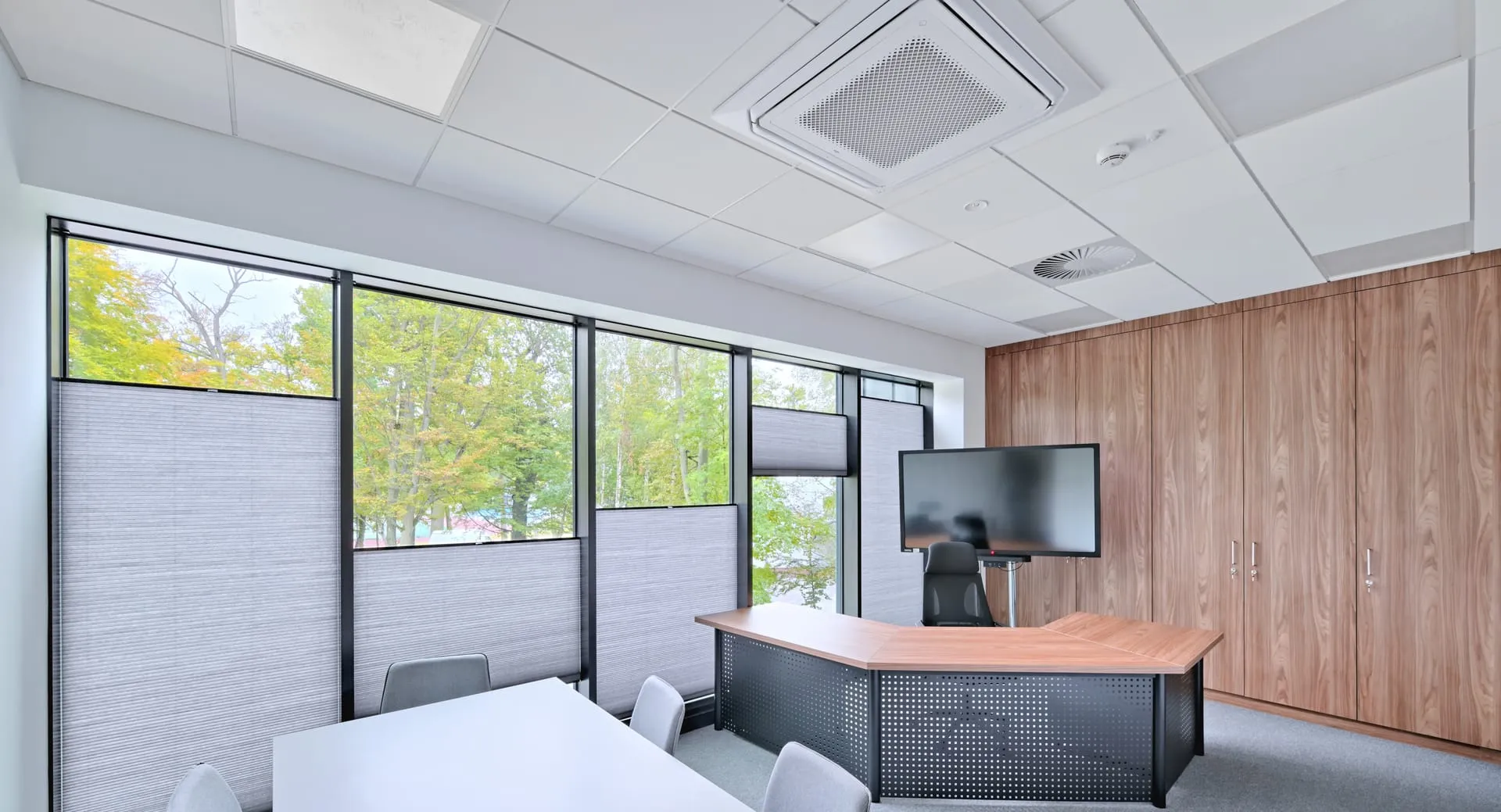
Service · Ceiling system
Suspended ceilings: modular, cassette and acoustic
Modular ceiling systems that absorb sound, shorten reverberation time and improve speech intelligibility — from sports halls and swimming pools to schools and offices.
Acoustic ceilings are suspended ceiling systems whose main task is to improve room acoustics — absorbing sound, shortening reverberation and reducing noise levels. In rooms with hard, smooth surfaces, sound repeatedly bounces off the walls and ceiling, making speech less intelligible and the interior loud and tiring. Because the ceiling is usually the largest free surface in a room, it has the greatest influence on how the room sounds — and a well-chosen acoustic ceiling is the most effective and most economical way to change that.
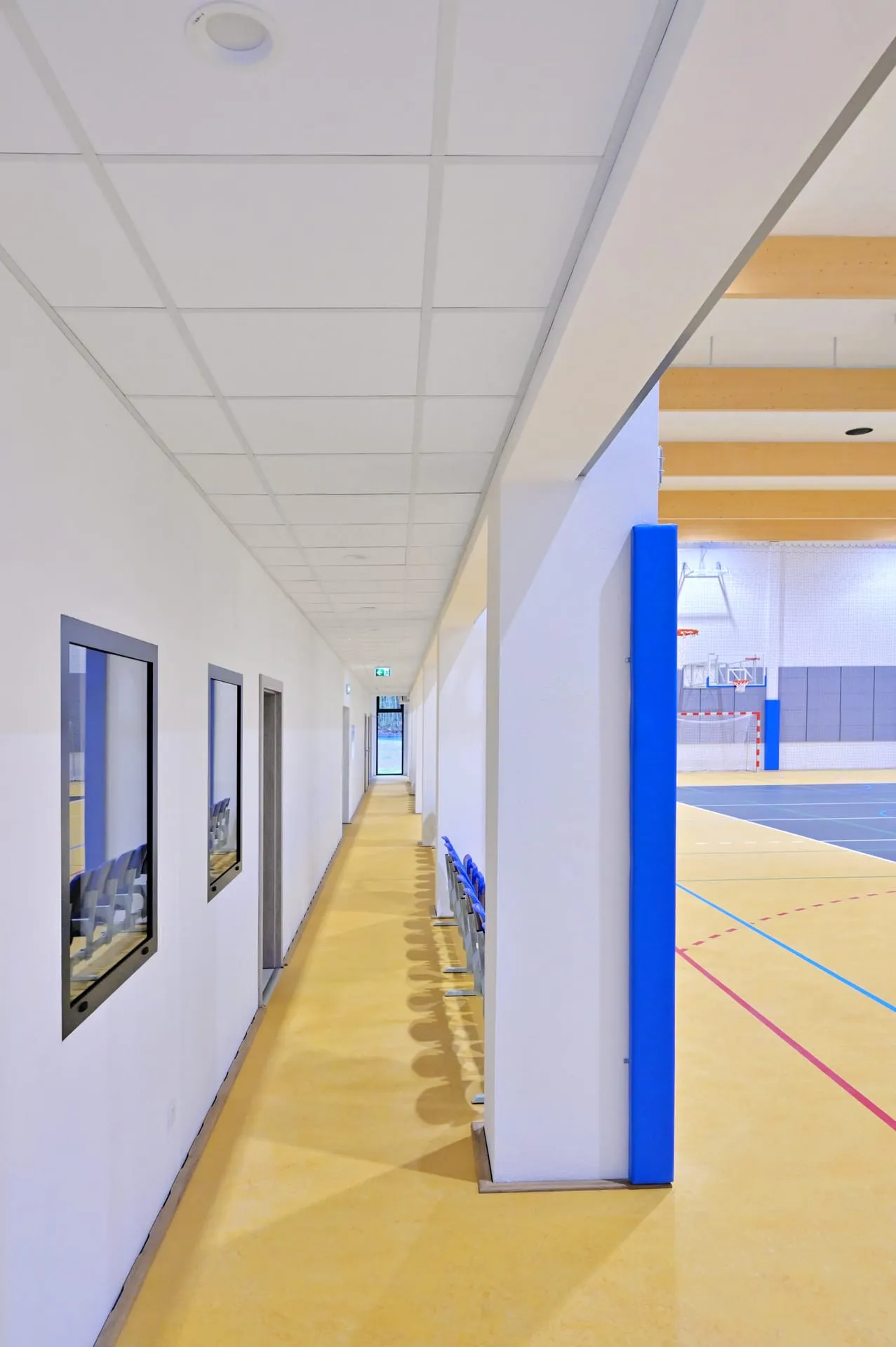
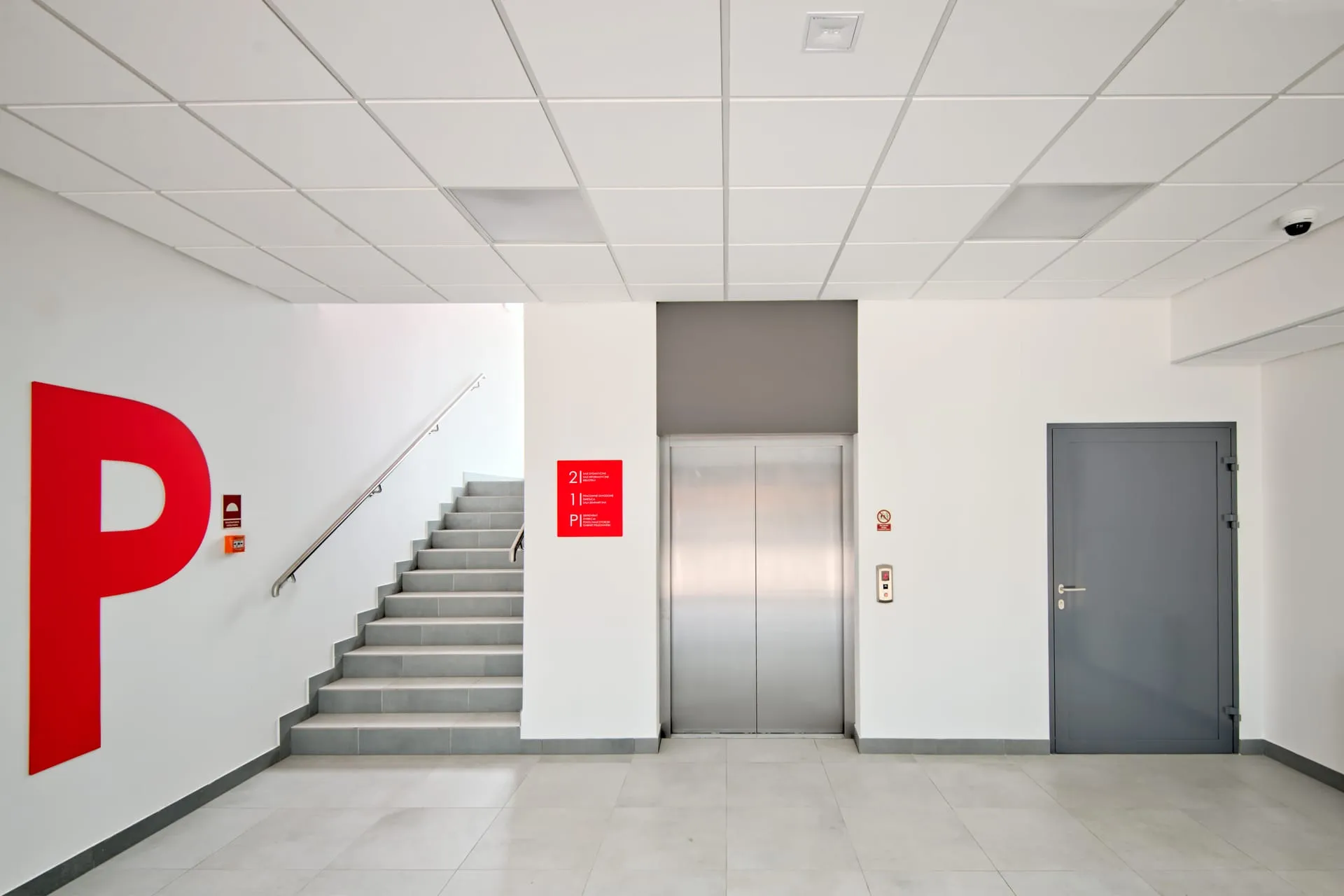
The operating principle is simple: instead of reflecting sound, an acoustic ceiling absorbs it. The panels are made from sound-absorbing materials that prevent the energy of the sound wave from returning into the room. Systems differ mainly in appearance and installation method — with a visible grid, with a smooth, uniform surface and no visible structure, or mounted directly to the soffit. They are available in various formats, colours and finishes, as well as in versions with enhanced resistance, for example to moisture or impact. This makes it possible to match the solution both to acoustic requirements and to the character of a specific interior.
Example projects
Facilities where we have used suspended ceilings.
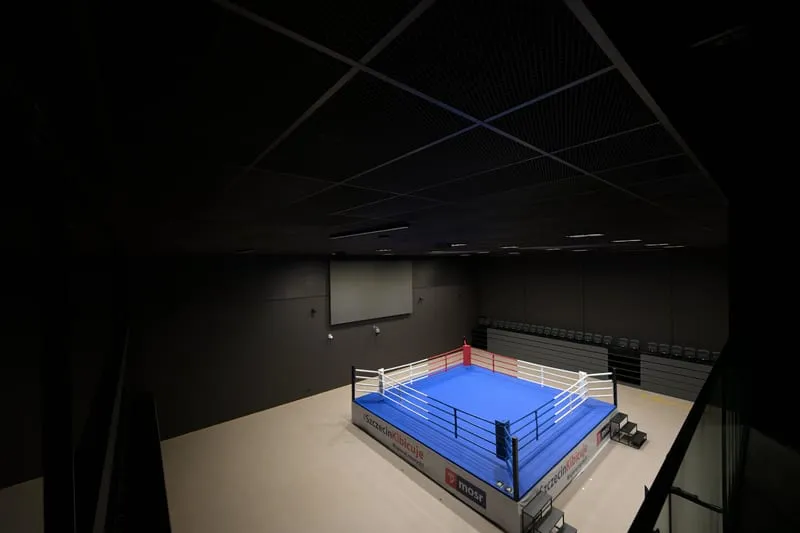
2026
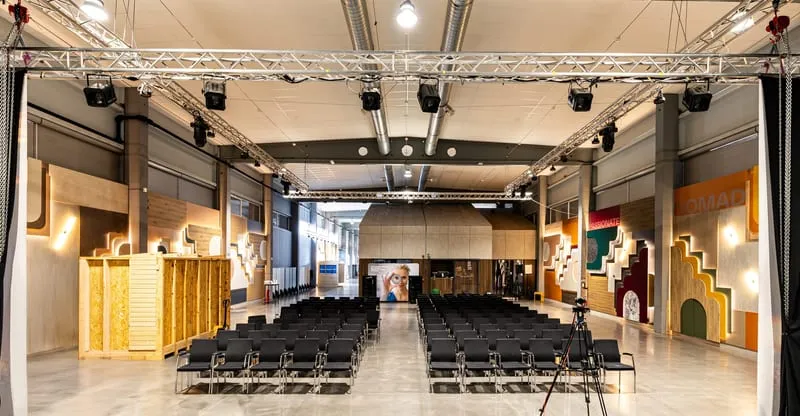
Szczeciński Dom Sportu
2025
Kronospan in Szczecinek
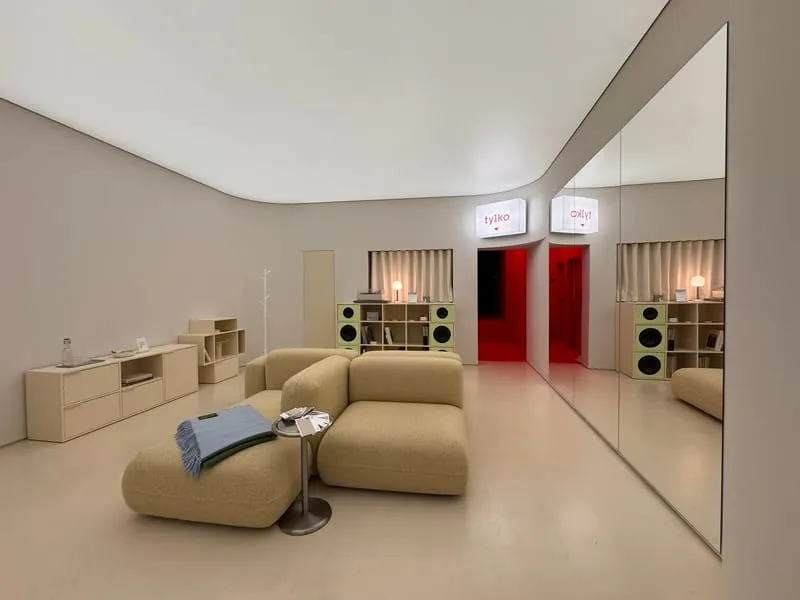
2025
Tylko showroom in Berlin
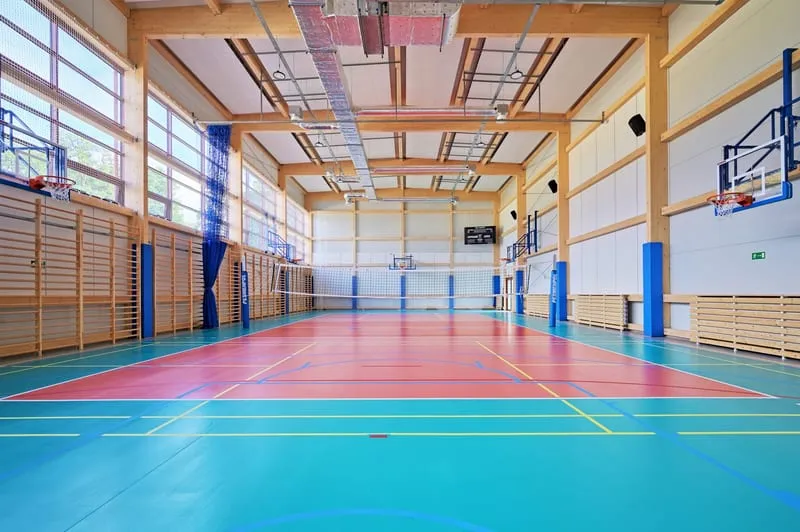
2023
Sports Hall at the Youth Educational Centre (Młodzieżowy Ośrodek Wychowawczy) in Babimost
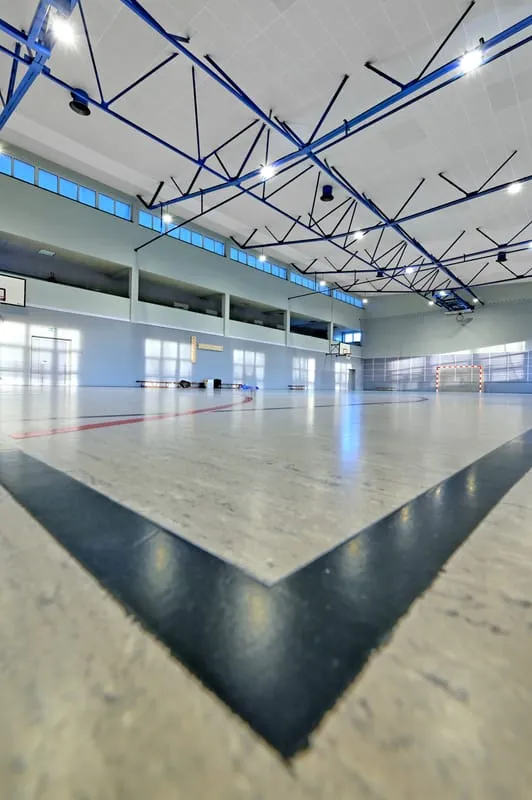
2022
Sports Hall at the Primary School in Kwilcz
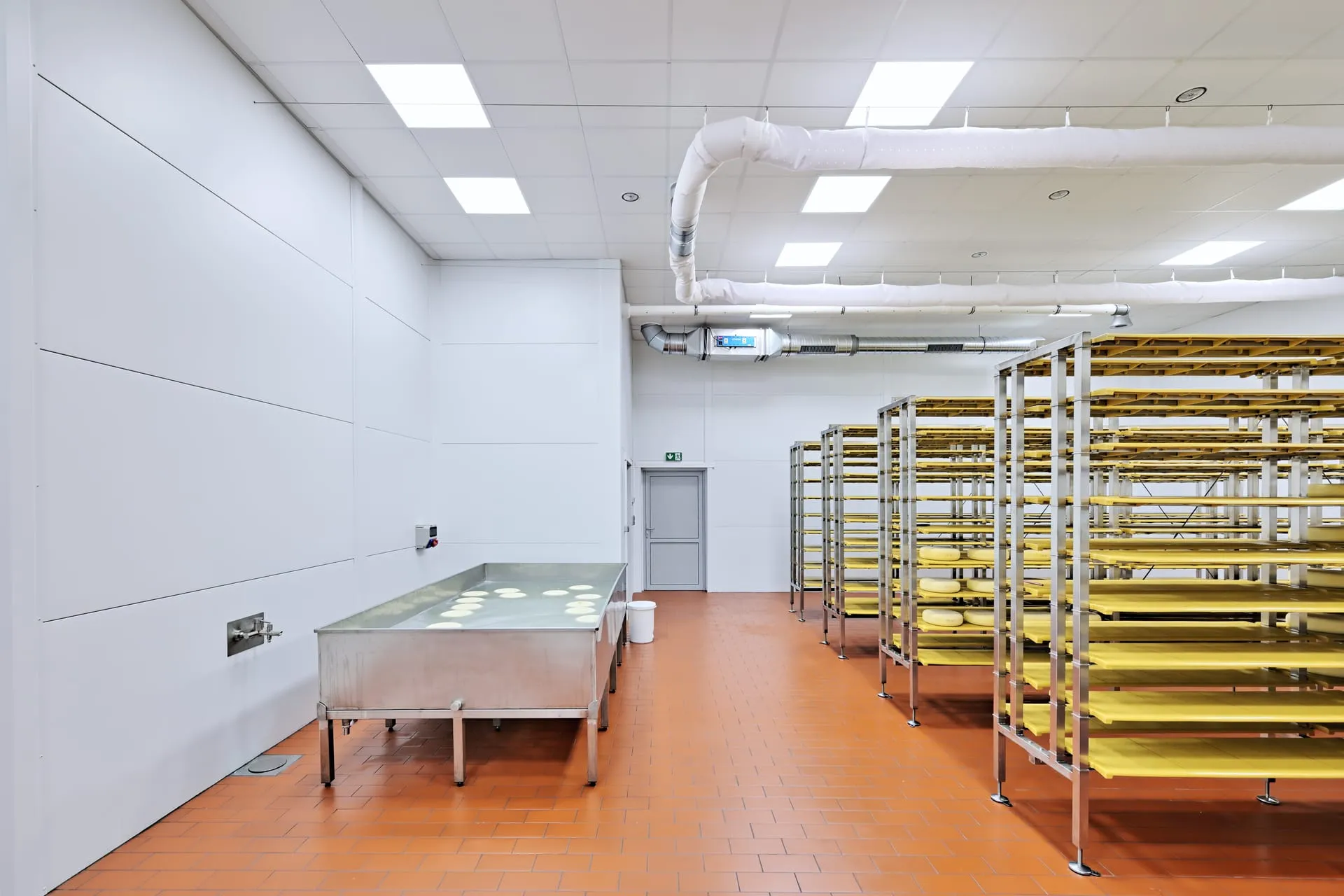
2021
Cheese Dairy in Golęczewo
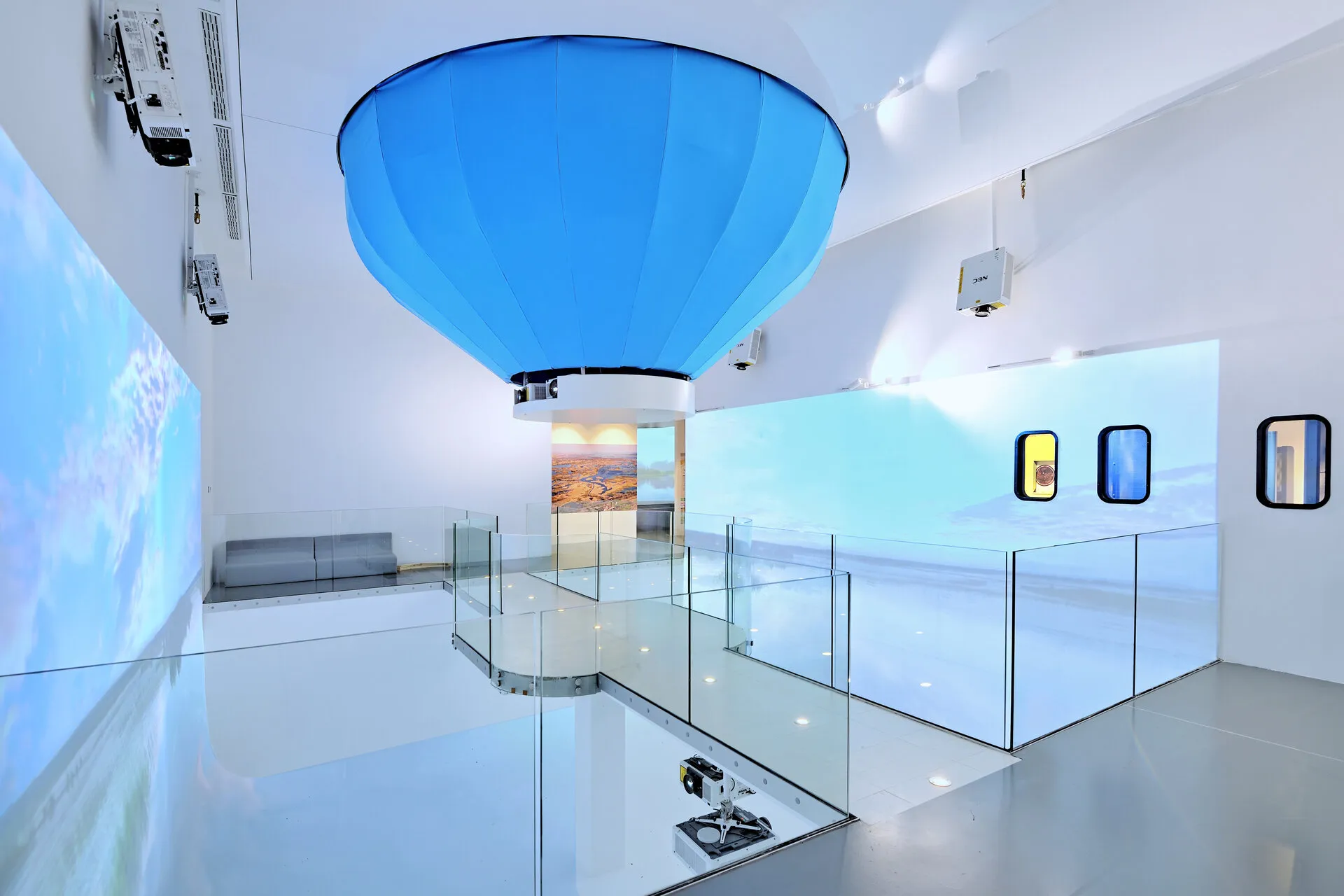
2020
Museum and Education Centre „Ujście Warty”
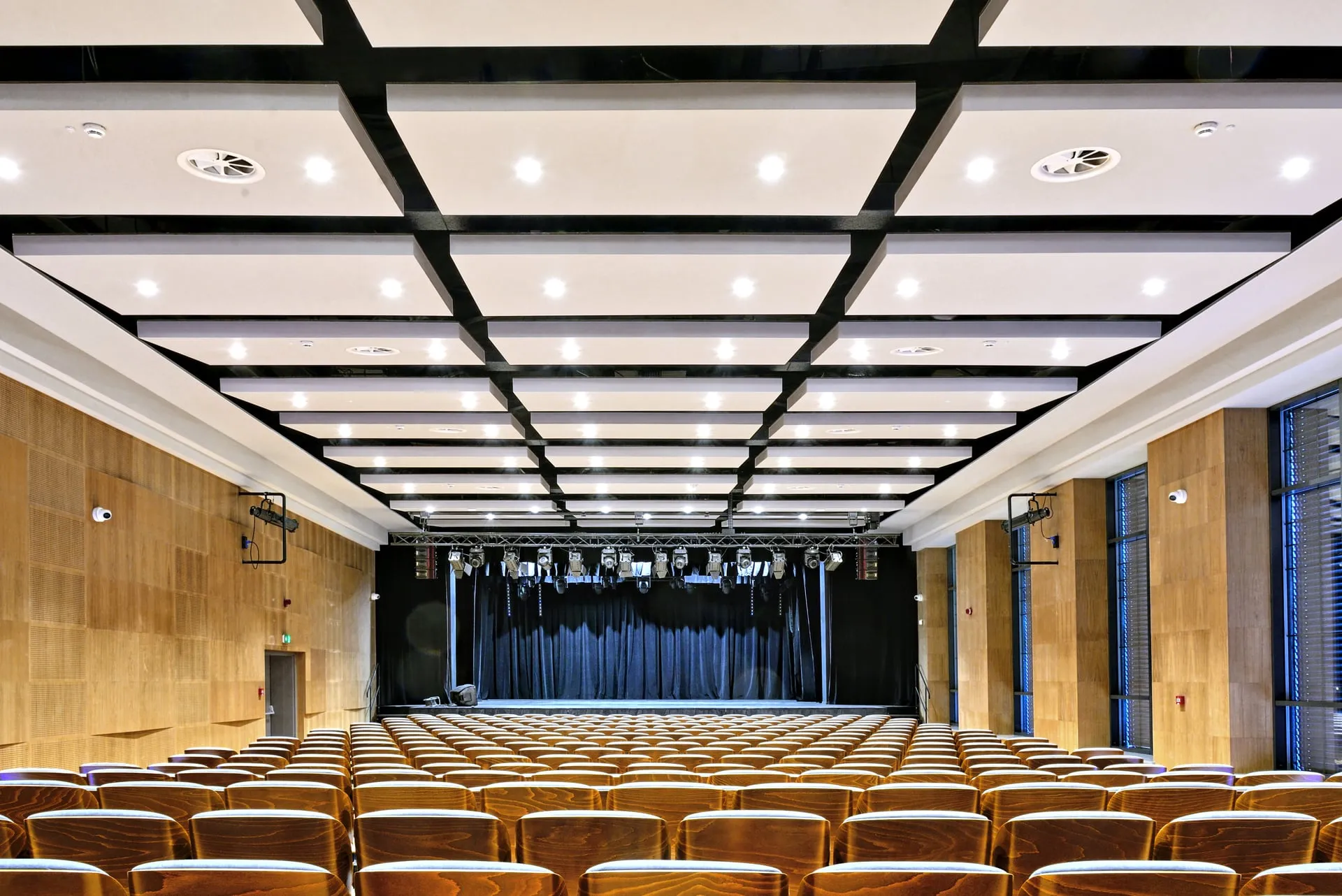
2020
Wrzesiński Ośrodek Kultury
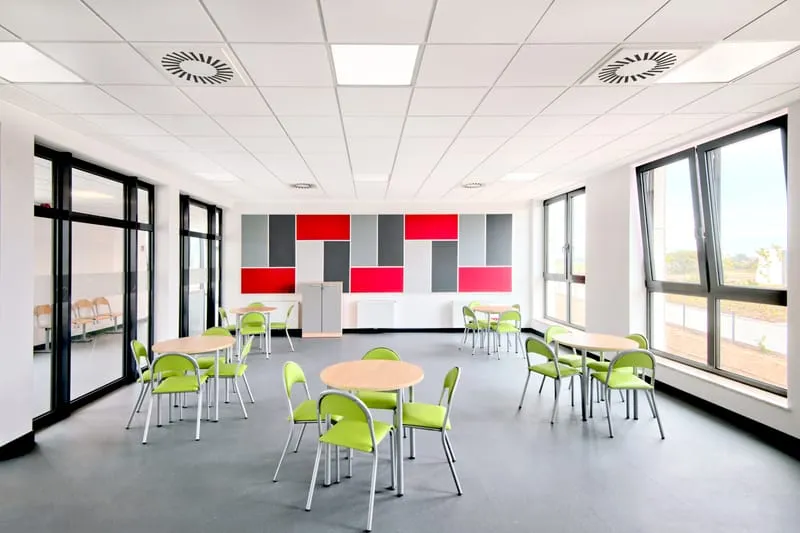
2020
Technical School Complex (ZST) in Tarnowo Podgórne
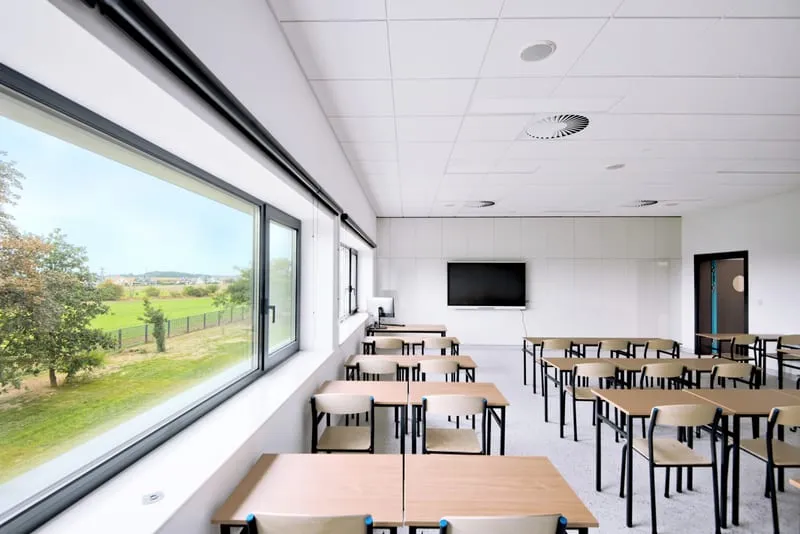
2020
School and Sports Hall in Cerekwica
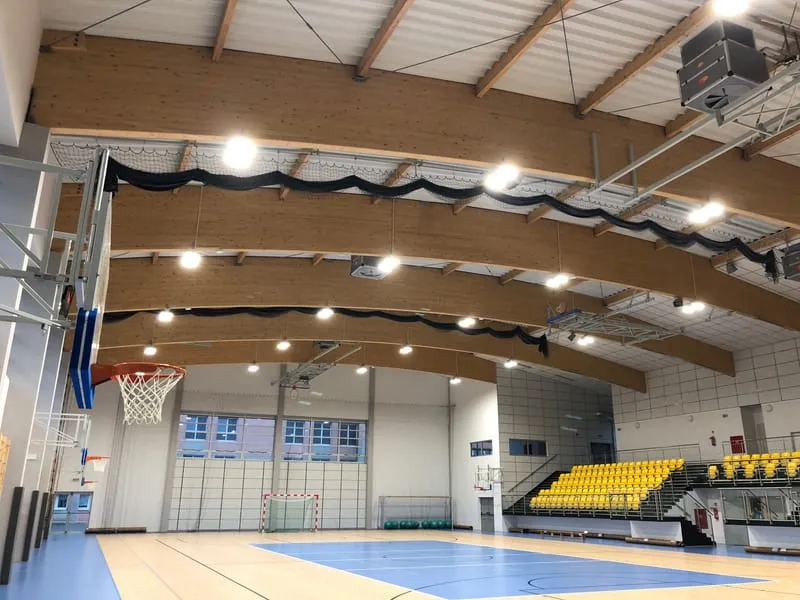
2018
Sports hall at the primary school in Kostrzyn
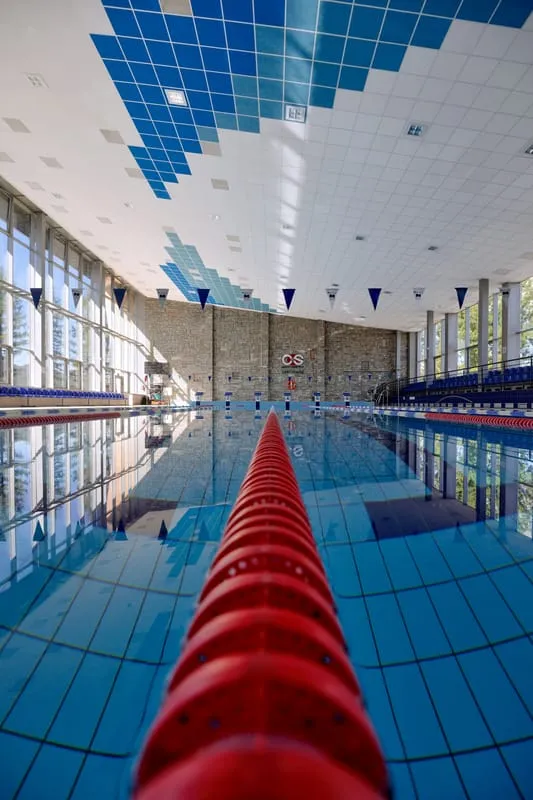
2018
Central Sports Centre in Zakopane
Where we apply it
- Sports halls
- Swimming pools and aquaparks
- Lecture halls
- Open-space offices
- Conference rooms
- Auditoriums
- Cultural buildings
- Religious buildings
- Laboratories
- Schools
Acoustic ceilings work well anywhere speech intelligibility and comfort matter: in schools and lecture halls, sports halls, offices, healthcare facilities, restaurants and public buildings. In many such interiors, good acoustics is today not just expected but positively required. The effect is audible immediately — shorter reverberation, clearer speech and lower noise levels, meaning less fatigue, easier concentration and simply a more pleasant, quieter interior.
At SufmarTECH, we carry out projects ranging from a dozen or so square metres to buildings measured in the thousands — we have more than 2,000 completed projects behind us. We're happy to advise on choosing a solution that meets acoustic, aesthetic and functional requirements, and we handle the entire project: from system selection and design, through delivery, to installation. We operate from our base near Poznań and deliver projects across Poland.
Frequently asked questions
How does a suspended ceiling improve a room's acoustics?
Hard walls, the floor and the soffit reflect sound, which then circulates in the room for a long time — this is reverberation, which makes speech unclear and lets noise build up. A suspended ceiling made of sound-absorbing tiles turns the largest surface of the room into an absorber: the sound wave hits a porous tile (mineral, glass wool or perforated) and loses energy instead of bouncing back. The effect depends on the tile's absorption class — described by the αw coefficient, explained in the guide absorption class αw — and on how much of the ceiling we cover. In large and demanding interiors, the amount and placement of the material is best determined in an acoustic study.
How does an acoustic ceiling differ from a suspended ceiling?
The term "suspended" describes only the installation method — it is a ceiling hung below the soffit, regardless of what it is made of. "Acoustic" refers to its function, meaning its ability to absorb sound. Most acoustic ceilings are suspended ceilings, but not every suspended ceiling is acoustic: an ordinary plasterboard panel under the soffit does not absorb sound. Whether a ceiling actually improves acoustics is therefore determined by the material, not by suspension alone.
What types of edges do acoustic ceiling panels have?
In short: the more concealed the structure, the calmer the ceiling looks — but at a higher cost and with more demanding installation. Manufacturers use their own designations, but in practice the edges come down to three types, which differ in how much of the support structure is visible. Edge A is a panel resting on the visible grid, flush with it — the simplest and most economical solution. Edge E is dropped below the grid and cut in a stepped profile, creating a shadow effect that partly masks the structure and emphasises the division into individual panels; edge Dg works similarly, giving the impression of a “floating” ceiling. Edge Ds, in turn, has a concealed structure and a smooth, almost monolithic surface, while still allowing the panels to be removed from below.
What panel thickness is needed for sound absorption?
There is no single universal value — it all depends on the frequencies you want to dampen. Standard 15–20 mm thick panels handle speech frequencies very well, especially when installed with an air gap above the panel. Thicker panels or an additional layer of mineral wool are used for more effective damping of low tones. Importantly, it is not just the thickness that matters, but also the distance between the ceiling and the soffit: the greater the space above the panel, the better low frequencies are absorbed.
What materials are acoustic ceilings made of?
Most often from glass or mineral wool. In addition, wood wool, perforated metal panels, gypsum panels and timber panels with a sound-absorbing layer are also used. What all these materials have in common is a porous or perforated structure that absorbs sound instead of reflecting it back into the room.
What corrosion protection should be chosen for a given environment?
The choice depends on the corrosivity category of the environment (per PN-EN ISO 12944). In dry, heated interiors — offices, schools, shops — a standard galvanised grid (C1) is entirely sufficient. In rooms with periodically elevated humidity, such as kitchens or shower rooms, a structure with enhanced resistance and a thicker zinc coating is used (C3). In the most demanding environments — swimming pools, chemical plants or the food industry — grids with high corrosion resistance are required (C4). The rule is simple: the more humid and aggressive the environment, the higher the required protection class of the structure.
What are the most popular ceiling modules and grid types?
The most popular acoustic ceiling modules are the 600 × 600 mm and 1200 × 600 mm formats. As for the ceiling structure (the so-called grid), it comes in two basic variants: T24 and T15 (this is the width of the profile the panels rest on). The support structure is selected depending on the panel type, edge type, environment class and the visual preferences of the designer or investor.
If I install an acoustic ceiling, will I stop hearing my upstairs neighbour?
Not necessarily — and this is a common misunderstanding. An acoustic ceiling absorbs sound inside the room and improves how it sounds, but on its own it does not block noise coming from above. Reducing noise from an upstairs neighbour requires sound insulation, meaning a heavy, airtight barrier, not absorption. Some ceiling systems can help with this, but it is a completely different task from typical interior acoustic improvement. In such cases, an acoustic study is required, along with an understanding of the causes you want to eliminate.
What is the difference between sound absorption and sound insulation?
Absorption refers to how much sound a material "soaks up" inside a room — it reduces reflections and reverberation, making the same room quieter and clearer. Sound insulation refers to how well a partition blocks sound transmission between rooms — how much noise passes from one room to another. In short: absorption improves the acoustics within a given interior, while insulation limits noise coming in from outside. An acoustic ceiling is responsible primarily for the former.
How much does an acoustic ceiling cost, and what determines the price?
Prices start from PLN 150/m², excluding VAT, and reach around PLN 6,000/m², excluding VAT, for premium systems such as Hunter Douglas. The final price is determined by the absorption class and panel type (glass or rock wool, metal, timber), the edge and grid type, the surface area and the installation height. Panels in the standard 600 × 600 mm module on a visible grid cost less than systems with a hidden structure or swimming-pool versions. We price every project individually, based on the design or a measurement. All prices given are indicative — the final price always depends on the building, the fixing system and the substructure.